

- E-nursery
- Gardens
- The best of Australia’s private and public gardens to inspire your own Native Plant Project large or small.



- Learn
- Tips from native plant experts, growing guides, seasonal gardening diaries and more…
- Projects
- Meet designers, architects, landscapers and creatives engaged in their own native plant projects…

- About
- Contact
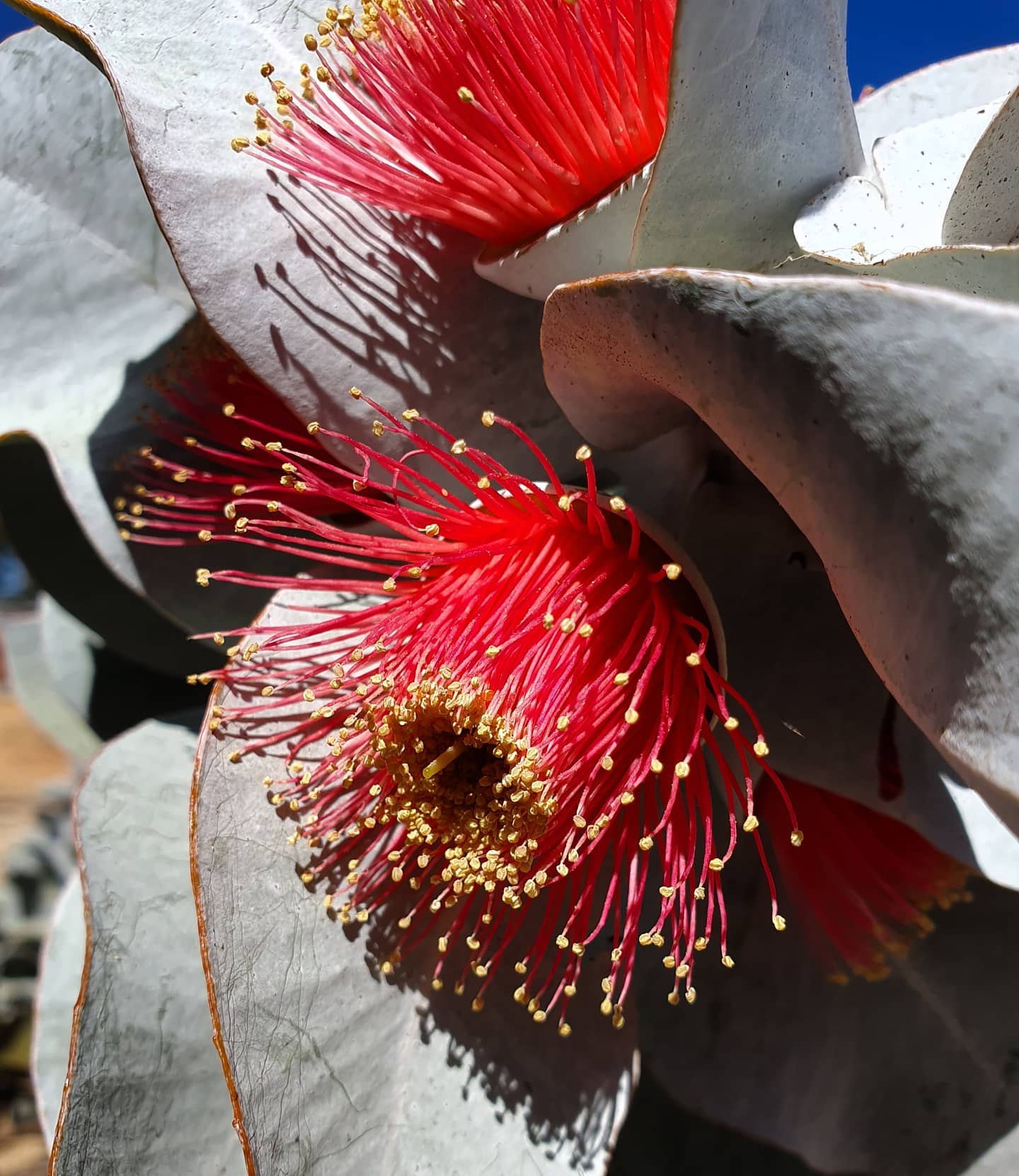
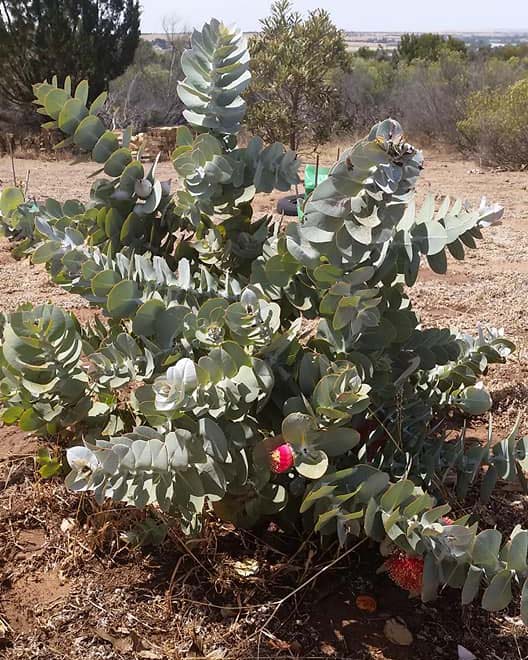
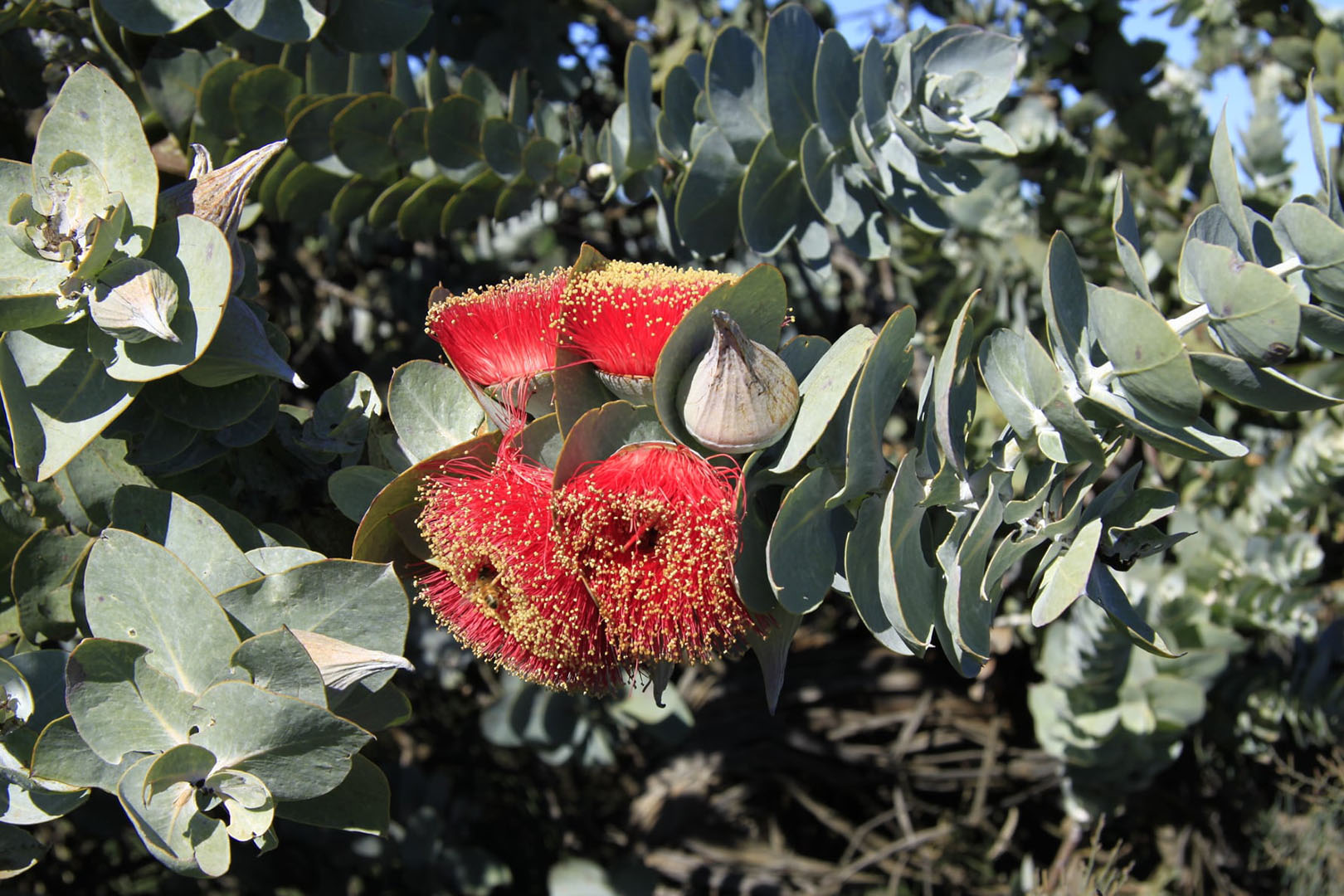
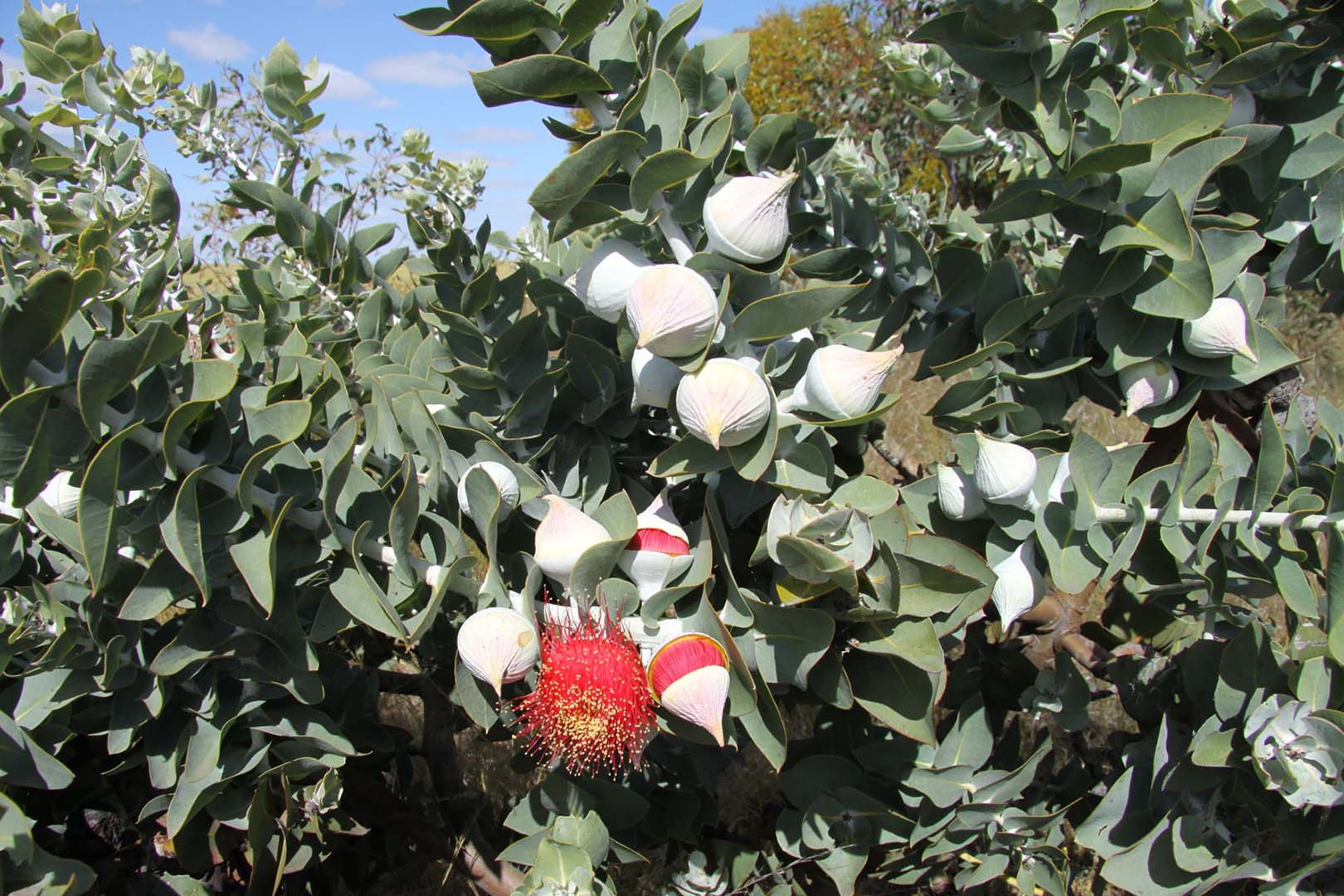
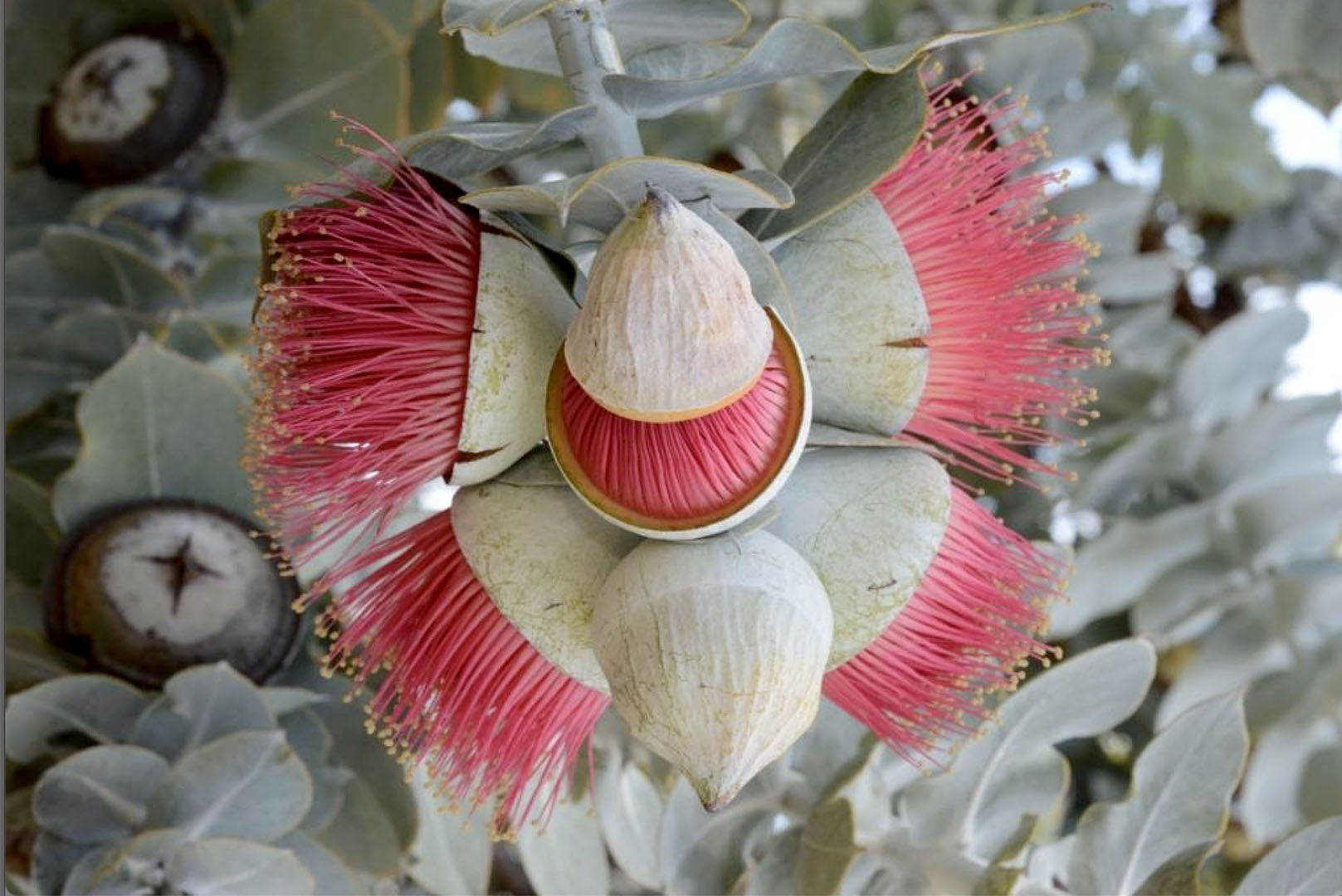
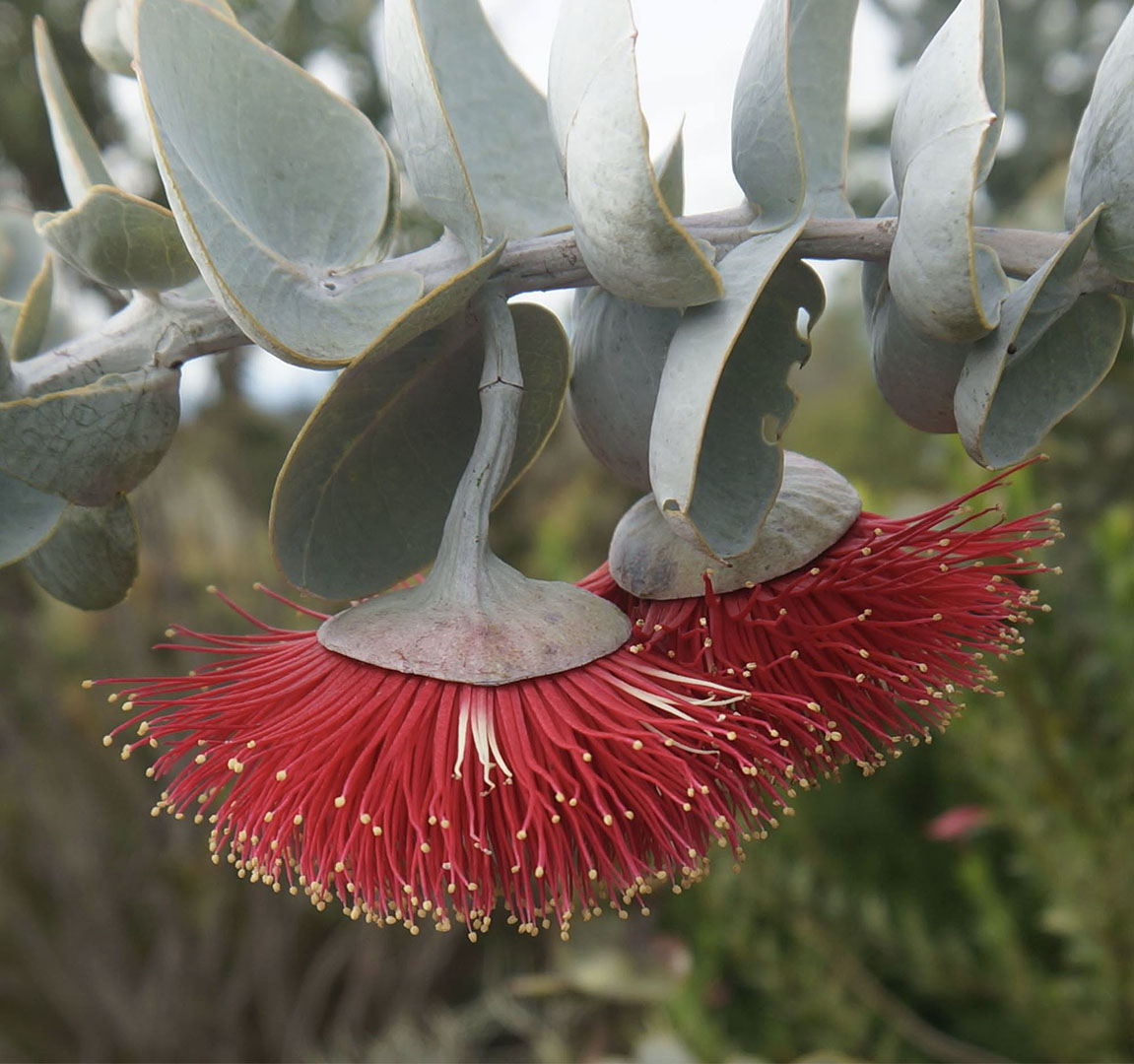
Eucalyptus macrocarpa – Small Leaved Mottlecah
This is undoubtedly one of Australia’s most striking flowering gums.
Known for its spectacular clusters of bright red blooms with yellow tips that can reach up to 10 cm in diameter, this is a smaller and more compact variety compared to Eucalyptus macrocarpa ssp. The Small Leaved Mottlecah grows as a spreading mallee or a small, crooked tree with powdery white branches, and its small, broad leaves are a soft grey-green, giving it a shimmery, silvery appearance. Large woody buds are mealy grey and, once open, reveal vibrant red and yellow flowers that create a bold contrast against the plant’s pale foliage. Flowering occurs in spring and summer, though it can bloom throughout the year. A great choice for a low-maintenance garden, it works well as a feature plant to add a splash of colour and texture and is ideal for arid and coastal landscapes.
Be sure to plant in well-drained soils and a full sun position to reach its full potential.
H ~ 2.5m W ~ 2.5m


Related products
-
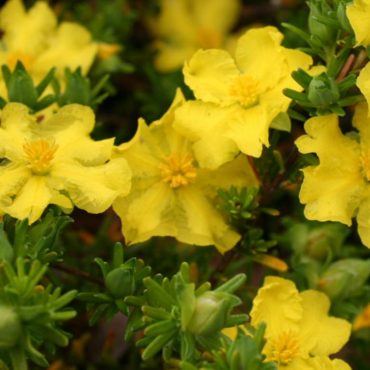
Guinea Flower
Add to cartH 0.3m | W 0.3m
-
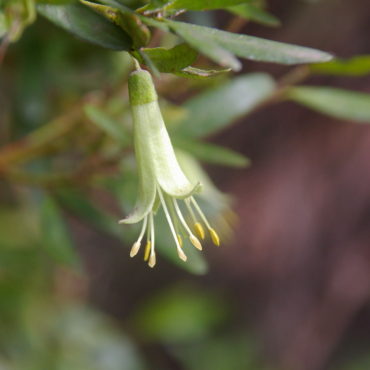
Rock Correa
Add to cartH 1.8m | W 1.8m
-
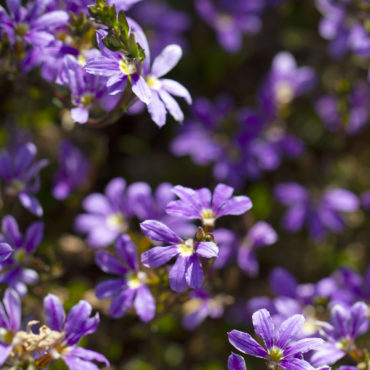
Fan Flower
Add to cartH 0.3m | W 1.5m
-
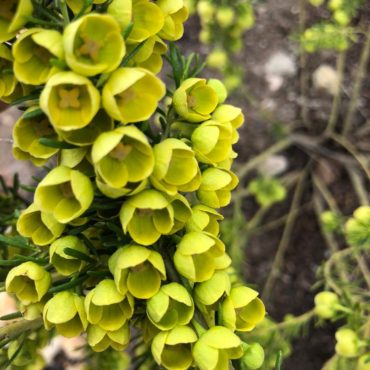
Yellow Boronia
Add to cartH 0.8m | W 0.6m